Locally
Won 3rd place in Adobe + Instagram Creative Jam! Discover and empower small businesses in your neighborhood — 3 iterations, 37 screens, 2 sleepless nights, and 16 cups of coffee.
Role
UX/UI Designer
Team
Team of 2
Tools
Adobe XD, Zoom, Discord
Timeline
1 week sprint
TL;DR — The Outcome
What shipped
- 3rd place out of 500+ submissions at Adobe + Instagram Creative Jam
- 37 screens across 3 iterations with a complete visual identity in 7 days
- Previous competition: AffiniTree with Amazon — honorable mention among 400 teams
My role
- Background research and creative direction
- Heavy visual design with balanced ideation
- Timeline management — team of 2
- Tools: Zoom, Discord, Adobe XD
Timeline
1 week (Adobe + Instagram Creative Jam 2021)
01 — Context
One week. One brief.
Five hundred teams.
Let's go.
Adobe Creative Jam 2022 was equal parts marathon and sprint. My first jam with Adobe + Amazon produced AffiniTree, an honorable mention among 400 teams across the US, UK, and Canada. This time the stakes felt higher, the competition fiercer — and our concept, Locally, placed 3rd out of 500+ teams.

The Brief
This round partnered with Instagram, and the problem space centered on empowering small businesses through accessibility. The constraint was deceptively simple:
“Design an accessible third-party app for Android mobile devices that highlight people's favorite local and undiscovered small businesses.”
02 — Research
Seven days. No extensions.
Ship or don't.
A week sounds short until you treat the constraint as a feature. We had no time for scope creep, so every decision had to earn its place. First move: lock down who we were designing for and what problem we were actually solving.
We wanted discovery to feel like an adventure, not a search
Strategic Questions:
- How do we make local exploration feel genuinely playful — not transactional?
- Should we curate the experience or let users wander on their own terms?
- Who actually craves this kind of discovery — and what triggers that craving?
- How do we close the visibility gap for small businesses without making them feel like ads?

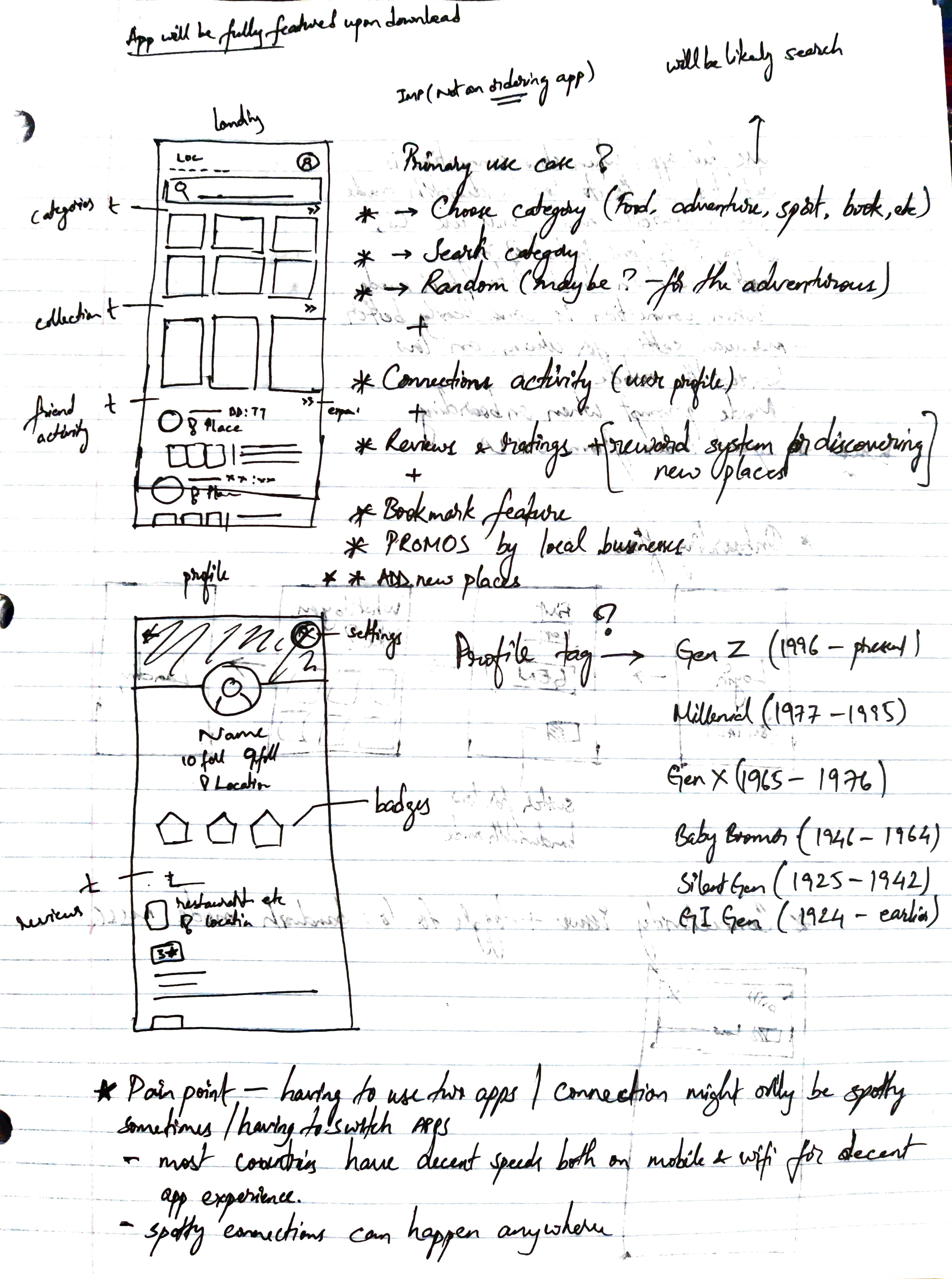
Early research notes — mapping the problem space
03 — Concept
Locally — because the best places
are already in your neighborhood.
2 designers · fully remote · 7-day sprint
My Role
Two designers, fully remote, collaborating across Zoom, Discord, and Adobe XD. In a jam this fast, clear ownership is everything. Here's what I drove:
- Foundational research — aligning our concept to the target audience, the brief's accessibility requirements, and competitive landscape.
- Creative direction — setting the visual tone with a bias toward bold, expressive design while keeping ideation grounded.
- Timeline management — structuring our week so we shipped on time with breathing room for last-minute polish.

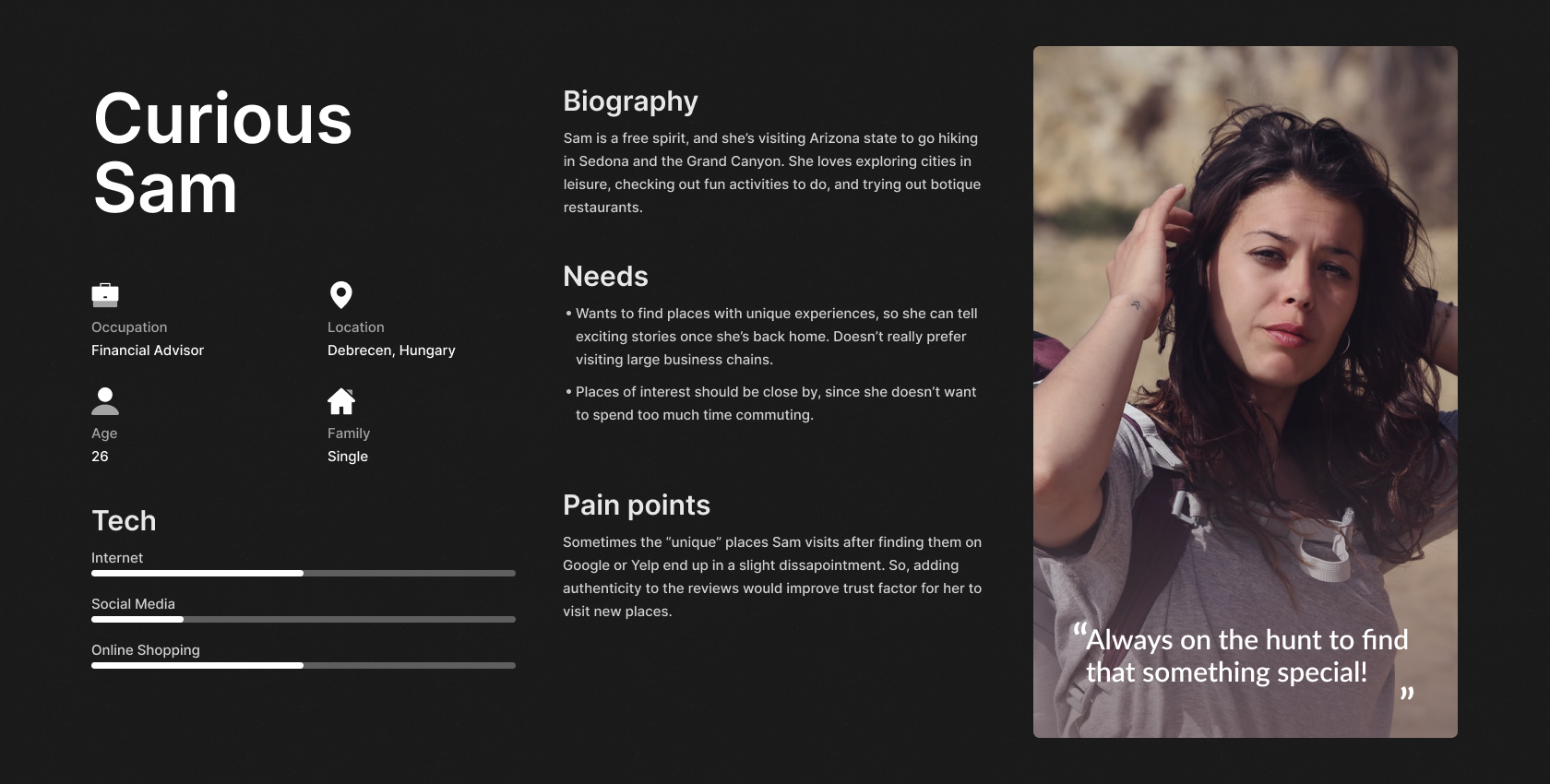
Meet our primary persona — Curious Sam
Target Audience
The age range was broad, but two behavioral traits gave us the sharpest focus:
- Locals who walk past hidden gems every day without knowing they exist — curious but habitual.
- Visitors exploring a new neighborhood who want authentic recommendations, not tourist traps.
User Survey
With only days on the clock, we couldn't afford a drawn-out research phase. We spun up a rapid Qualtrics survey to pressure-test our assumptions and surface the preferences that would actually shape the product.
Key signals from 106 responses:
Food dominated
People gravitate toward dining over activities when exploring locally.
Ambiance & service
The strongest emotional drivers — more than price or convenience.
Novelty vs. familiarity
A near-even split — we needed to serve both cravings.
Google Maps is default
Our opportunity was making discovery feel less utilitarian.
Positivity gap
People rarely share positive experiences but are quick to voice negative ones.
04 — Architecture
Information Architecture
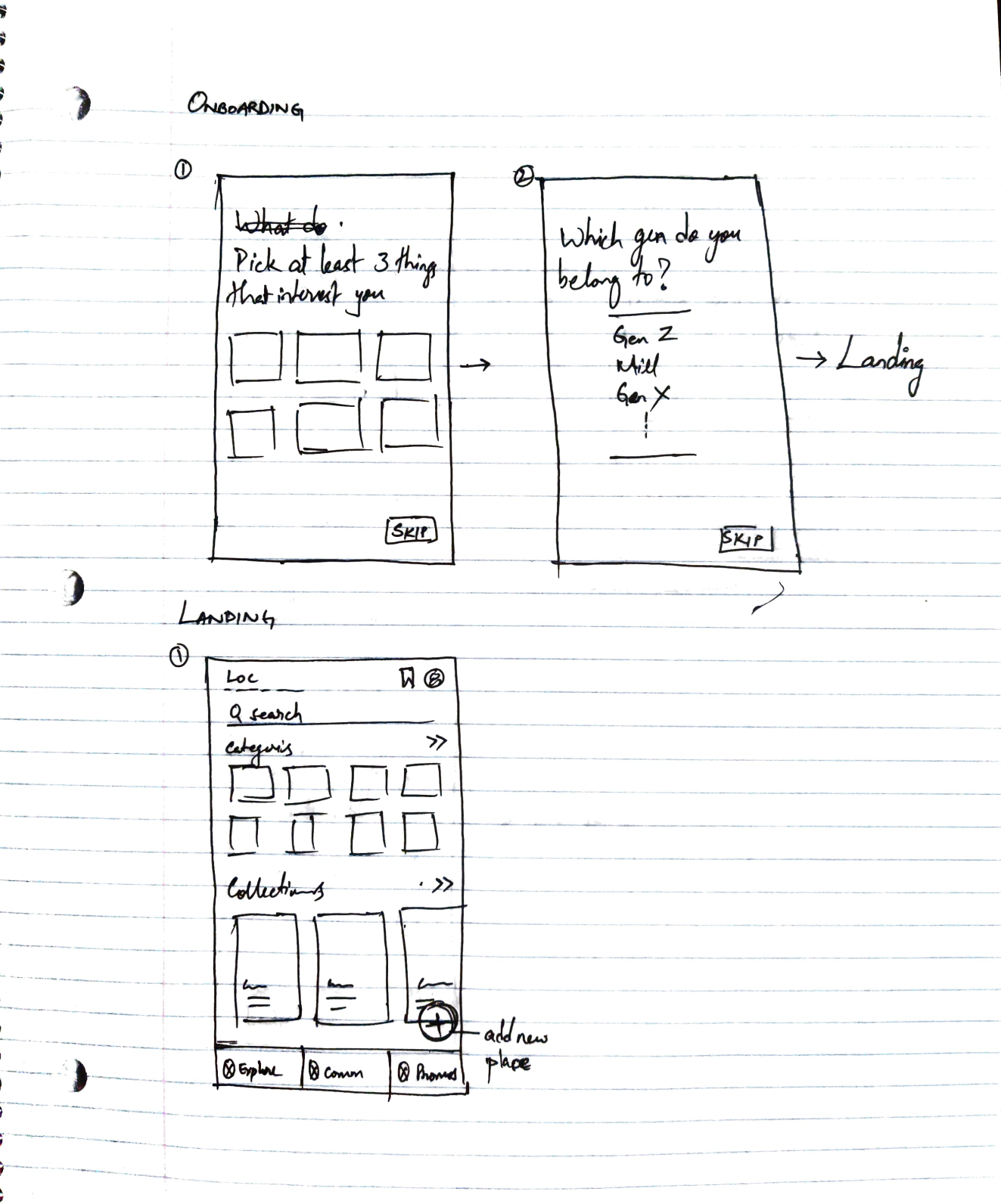
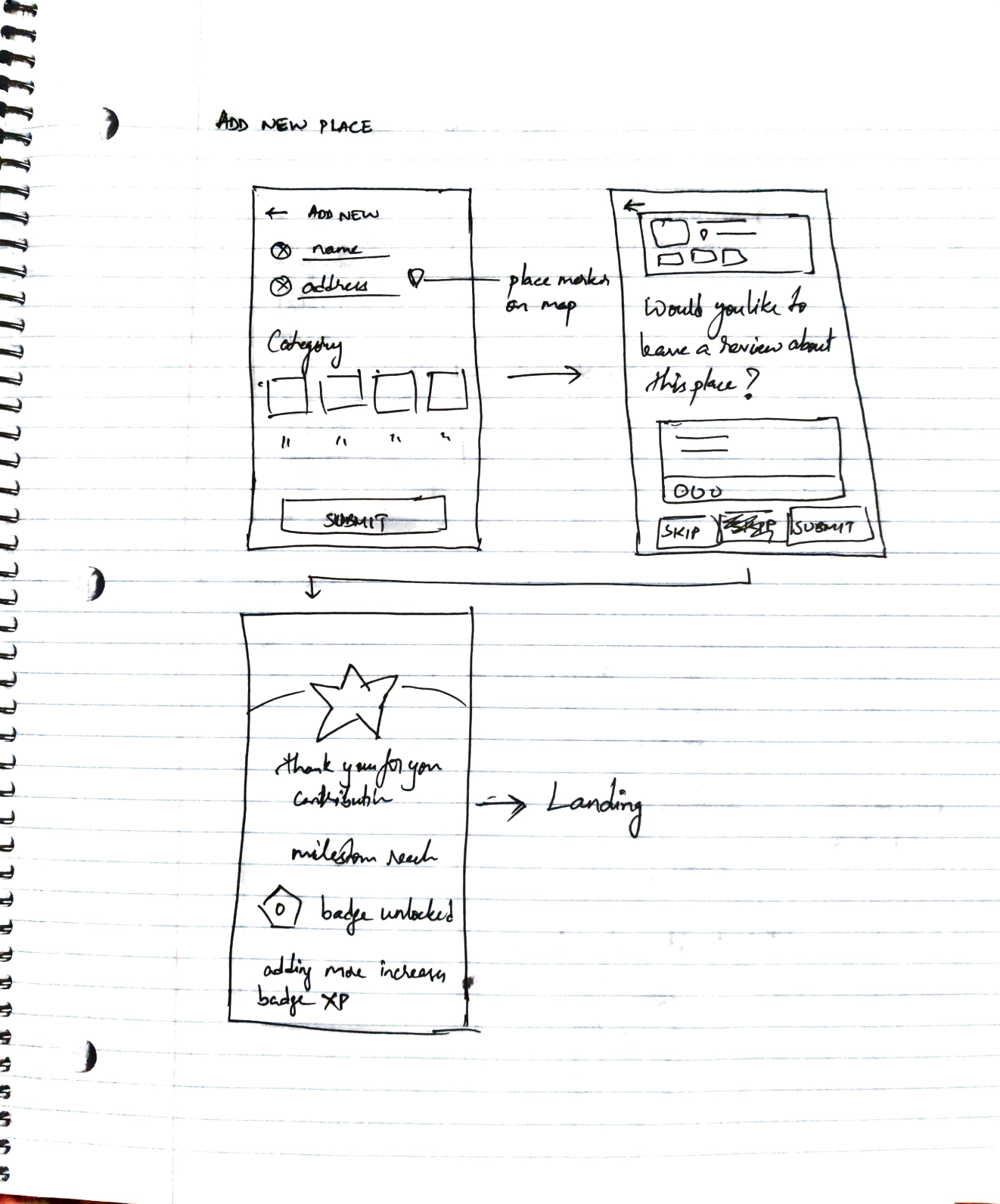
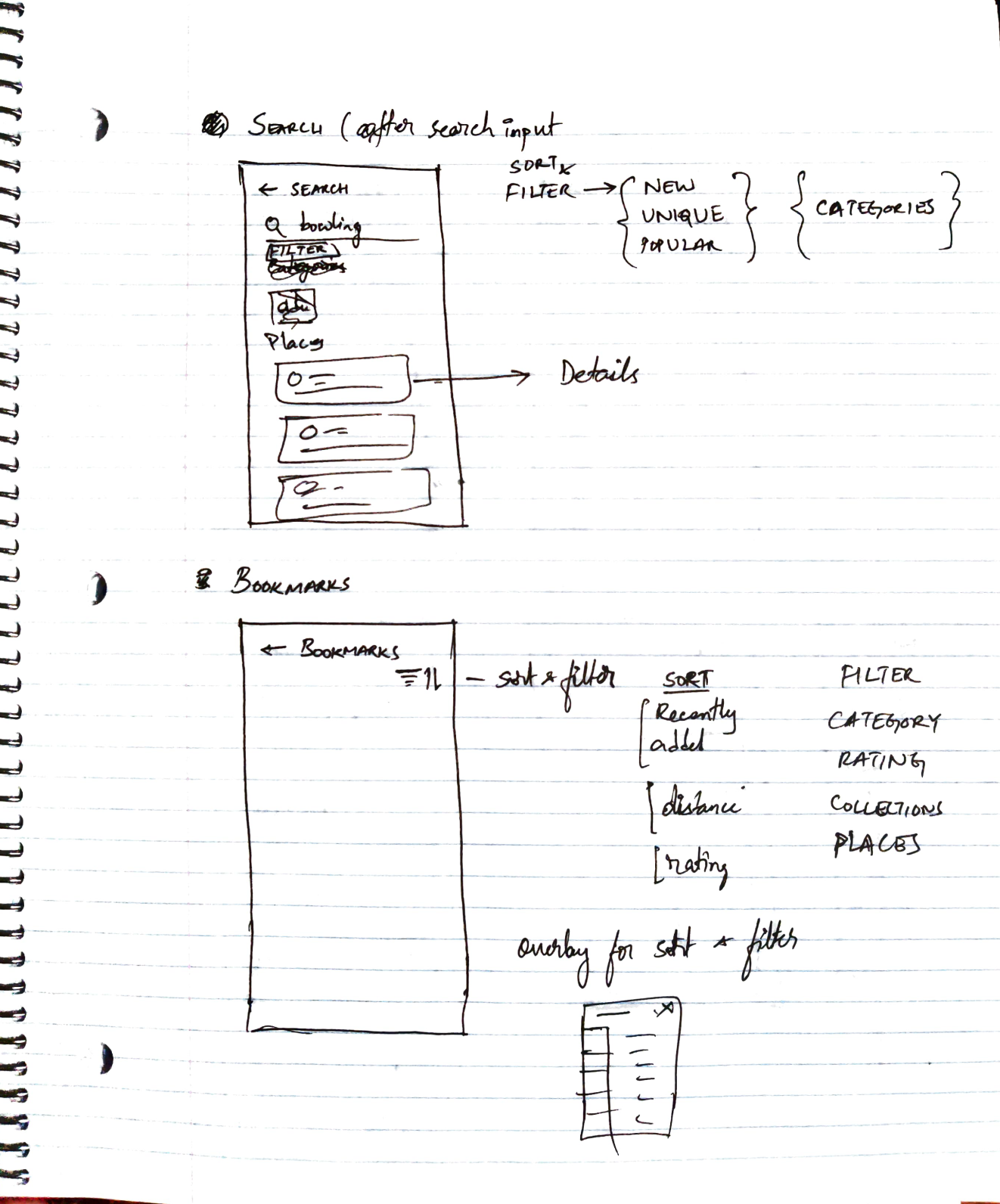
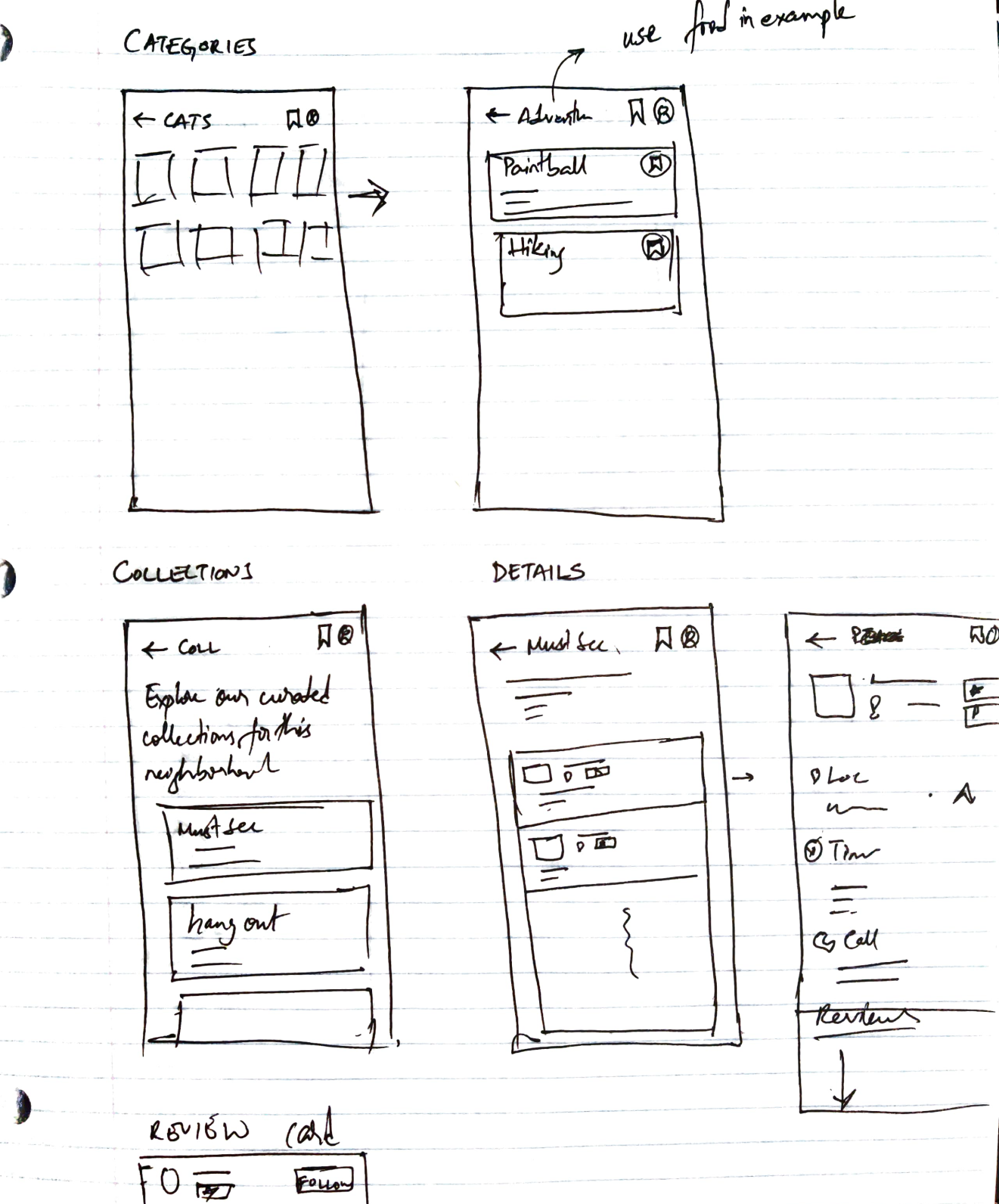
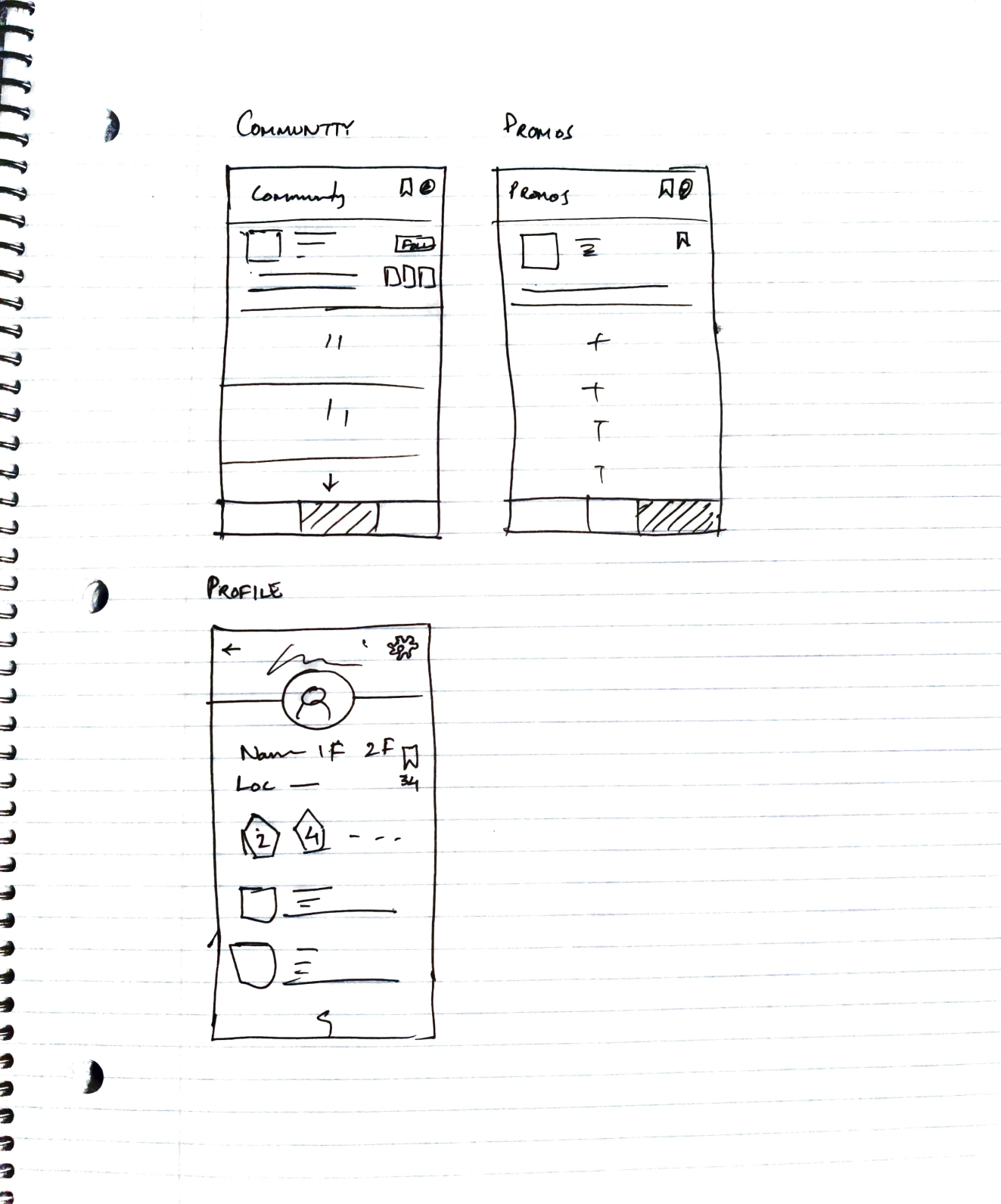
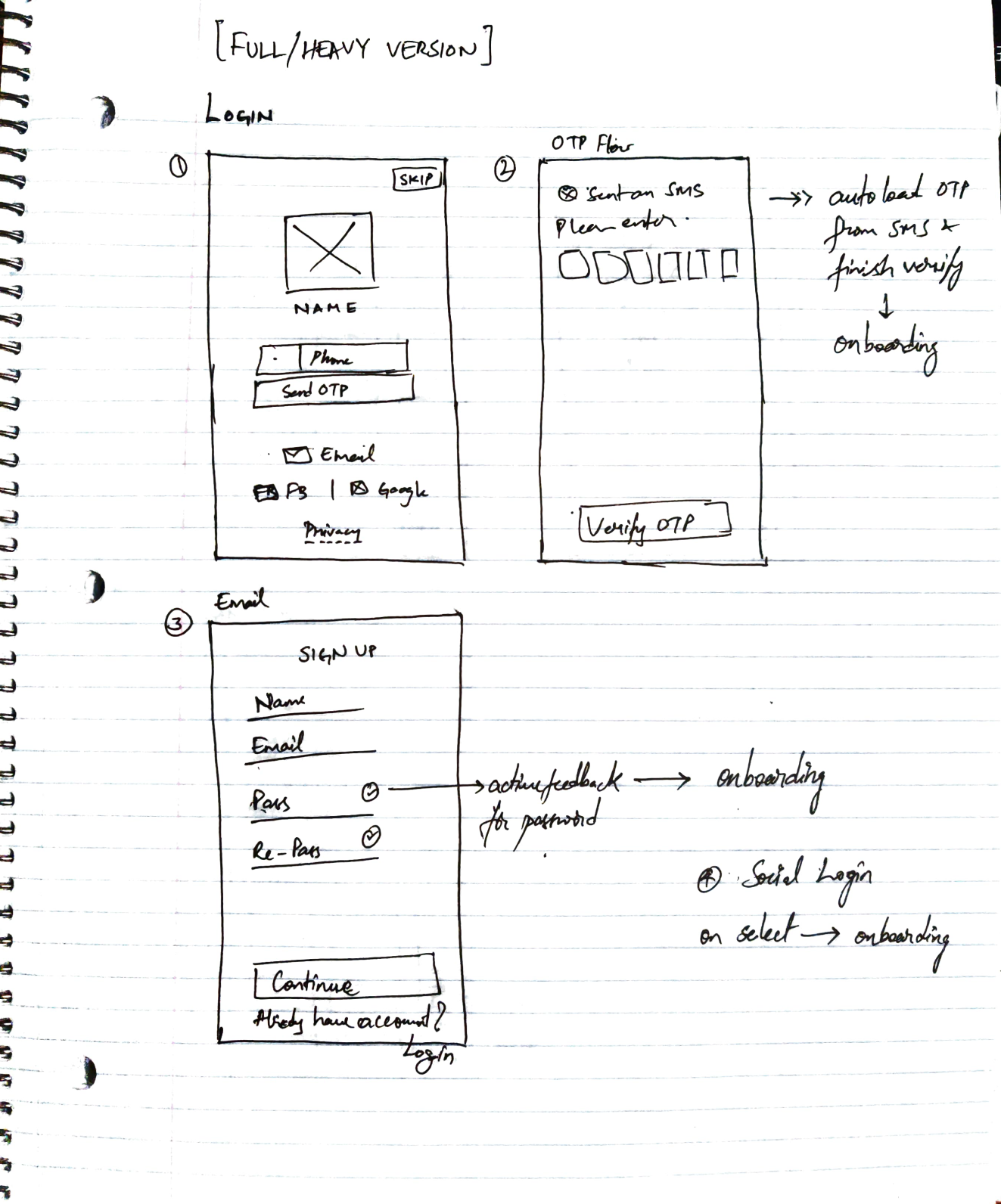
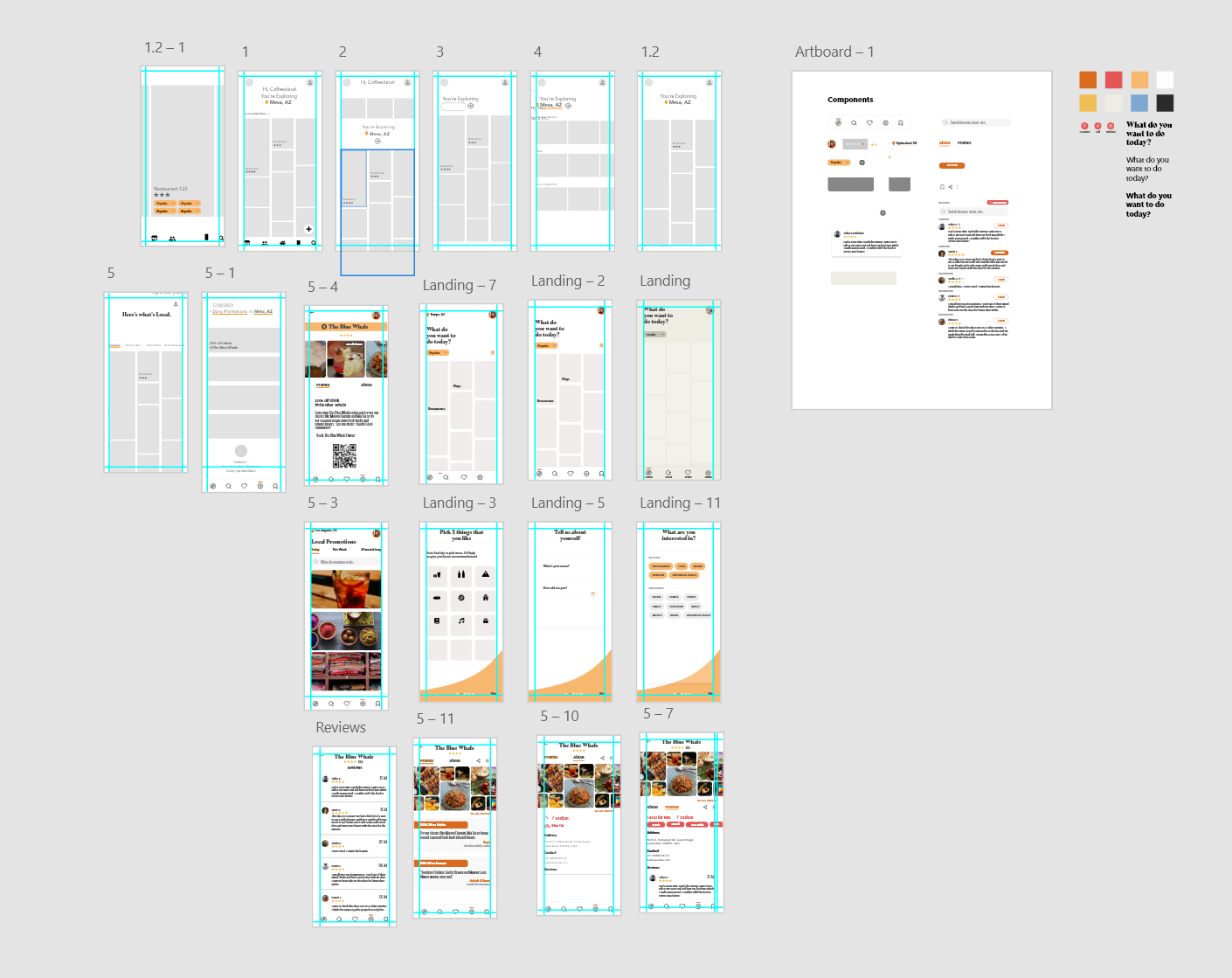
Before opening a single artboard, we mapped the full screen hierarchy and core user flows. With only a week, this became our prioritization tool — it told us which screens to design first and which to cut if time ran short.
From napkin sketches to structure
Rapid pen-to-paper exploration, then straight into Adobe XD to validate layout and flow


Design doesn't converge — you decide when to stop.
Every wireframe opened a door to three more ideas. That's the thrill and the trap of a jam — inspiration is cheap, focus is expensive. My role became part designer, part editor: channeling our energy toward the ideas that served users best while keeping the clock honest.
05 — Visual Design
Building a brand in days, not months
The brand had to feel warm, adventurous, and instantly inviting.
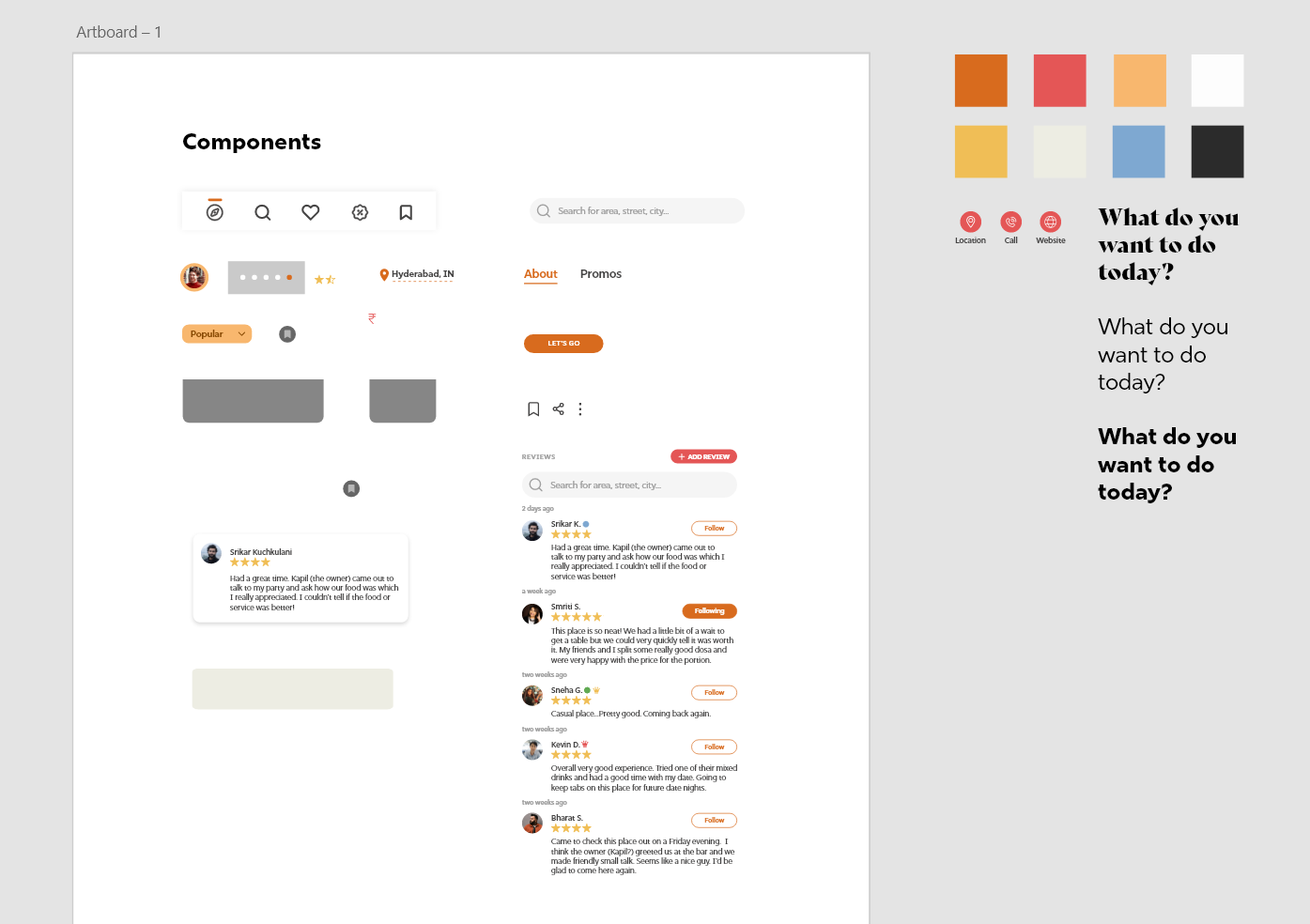
We landed on a red-orange palette with clean white space — colors that evoke excitement and warmth without screaming at you. Rounded edges everywhere reinforced the approachable, friendly tone we wanted users to feel on first launch.
Bely Display brought personality to headings — it felt exploratory without being whimsical. Paired with Rig Sans for body text, we got readability and character in a single type system.
We also built a small component library in XD — not out of perfectionism, but survival. When you're iterating at this speed, global edits need to be one click, not thirty.
A mini design system — born from necessity, not process.

The Locally visual system — palette, typography, and reusable components
Interactive Prototype
06 — The Product
Meet Locally.
A community-powered discovery platform where neighborhoods come alive. Locally immerses users in the places around them — surfacing hidden gems, celebrating familiar favorites, and giving small businesses a direct line to the people nearby.
And because discovery happens on the go, Locally gracefully degrades on poor connections — switching to a lightweight text-based mode so you never lose access to what matters.
Explore
An unguided, serendipitous feed of places around you. The more you use Locally, the sharper its recommendations become — learning your tastes without asking.
Community Activity
See what people in your neighborhood are discovering. Follow friends, locals, and tastemakers to find places through shared curiosity.
Promotions
Small businesses push deals directly to nearby users — no algorithms burying them. It’s the most direct connection between a shop and its community.
Accessible
When connectivity drops, Locally doesn’t break. It switches to a lightweight text-based mode so you always have the information you need, wherever you are.
07 — Reflection
What I'd do differently
Hindsight is 20/20 — and that's the point.
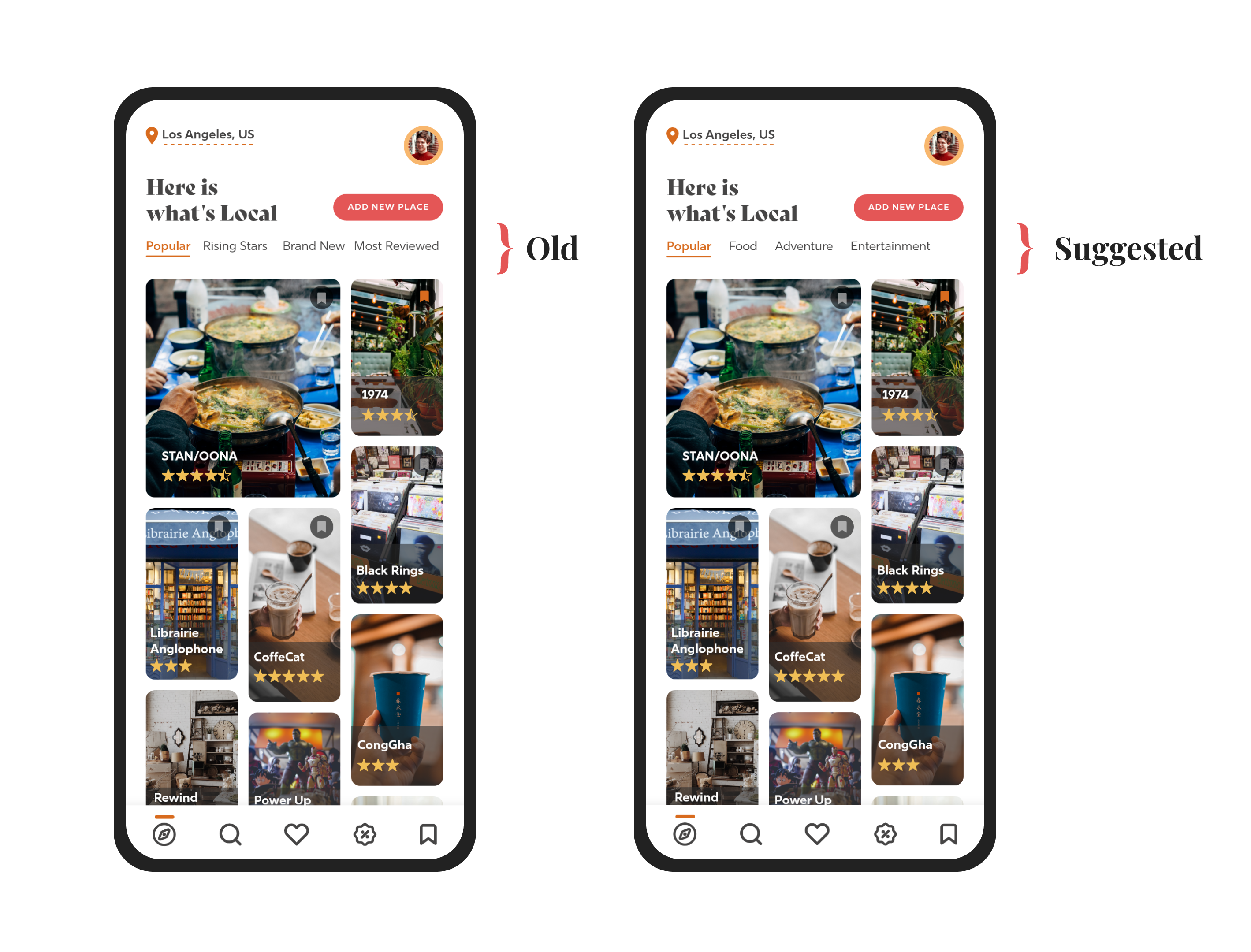
The landing screen defaulted to “New” and “Popular” — functional, but generic. Given more time, I'd have introduced intent-based categories like Food, Adventure, and Entertainment so users could signal what kind of discovery they were in the mood for. That one change would have made the experience feel far more personal from the first scroll.

Components & Color Scheme

Landing Page
“One more week and we'd have won it.”
— Every designer, after every jam
Next case study